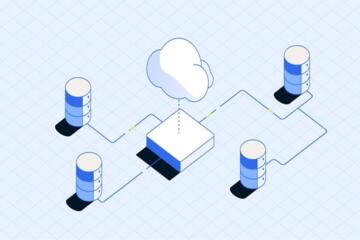
Overview: What API Integration Really Means in Practice
API integration is not just about “connecting systems.” In real-world projects, it is about data consistency, latency control, error handling, and long-term maintainability.

An API (Application Programming Interface) defines how one system communicates with another. When teams integrate APIs, they create dependencies between uptime, versioning, authentication, and performance. According to a 2023 Postman report, over 83% of organizations rely on APIs for mission-critical operations, and the average mid-sized company manages more than 400 internal and external APIs.
In practice, API integration shows up everywhere:
-
A SaaS platform syncing payments via Stripe
-
A support system sending SMS alerts through Twilio
-
Mobile apps authenticating users via OAuth providers like Auth0
When integrations are designed well, users never notice them. When they are not, outages, data loss, and security incidents follow.
Main Pain Points in API Integration
Most API problems are not caused by the API itself, but by how it is integrated.
Poor error handling
Many teams assume APIs return valid data. In reality, APIs fail due to timeouts, rate limits, invalid payloads, or upstream outages. Ignoring error states leads to silent data corruption or broken user flows.
Tight coupling between systems
Hardcoding API endpoints, schemas, or credentials directly into application logic creates brittle systems. When an API version changes, deployments break across environments.
No performance or load planning
APIs behave differently under load. A payment API that responds in 200 ms during testing may slow to 2–3 seconds during peak traffic. Without retries or queues, this causes cascading failures.
Weak security practices
Exposed API keys, missing request validation, or excessive permissions remain one of the top causes of breaches. Verizon DBIR reports that over 30% of web application breaches involve API abuse or misconfiguration.
Practical Solutions and Proven Recommendations
1. Design integrations as independent layers
What to do:
Create a dedicated integration layer or service instead of embedding API logic directly into business code.
Why it works:
This isolates failures and simplifies updates when APIs change.
In practice:
-
Use a service wrapper around external APIs
-
Centralize authentication, retries, and logging
Tools:
-
API gateways like Kong or AWS API Gateway
-
Service meshes in Kubernetes
Results:
Teams report up to 40% reduction in integration-related incidents after decoupling API logic.
2. Implement strict timeouts, retries, and circuit breakers
What to do:
Never rely on default timeout values. Define retry strategies with exponential backoff.
Why it works:
This prevents temporary API failures from crashing your system.
In practice:
-
Timeout: 2–5 seconds for external APIs
-
Retries: 2–3 attempts with backoff
-
Circuit breaker: stop calls after repeated failures
Tools:
-
Resilience4j
-
Envoy proxy
Results:
Production systems with circuit breakers show 60–70% fewer cascading failures during outages.
3. Validate and sanitize all API data
What to do:
Treat API responses as untrusted input.
Why it works:
APIs change, bugs happen, and malformed data breaks downstream logic.
In practice:
-
Enforce JSON schema validation
-
Reject unexpected fields
-
Log schema mismatches
Tools:
-
OpenAPI (Swagger)
-
Ajv (JSON Schema Validator)
Results:
Reduces data-related bugs by up to 50%, especially in multi-API environments.
4. Use asynchronous processing wherever possible
What to do:
Avoid synchronous API calls in user-facing flows unless absolutely necessary.
Why it works:
Queues absorb latency spikes and API downtime.
In practice:
-
Payments, notifications, analytics via background jobs
-
Use message queues instead of direct calls
Tools:
-
RabbitMQ
-
Apache Kafka
Results:
Improves perceived application performance by 30–50%.
5. Monitor APIs as first-class production components
What to do:
Track API latency, error rates, and response sizes.
Why it works:
You detect degradation before users complain.
In practice:
-
Separate dashboards per API
-
Alerts on SLA breaches
Tools:
-
Datadog
-
New Relic
Results:
Mean time to resolution (MTTR) drops by 35–45%.
Mini Case Examples
Case 1: SaaS Billing Platform
Company: B2B SaaS with 120k monthly users
Problem: Payment failures during peak hours due to synchronous API calls
Solution:
-
Introduced async payment processing
-
Added retries and circuit breakers around Stripe API
Result:
-
Payment failure rate dropped from 2.4% to 0.3%
-
Support tickets reduced by 38%
Case 2: Logistics Mobile App
Company: Regional delivery service
Problem: External geocoding API caused app freezes
Solution:
-
Cached responses
-
Added fallback provider
-
Enforced 3-second timeouts
Result:
-
App crash rate reduced by 52%
-
Average delivery ETA accuracy improved by 18%
API Integration Checklist (Production-Ready)
| Area | Check |
|---|---|
| Authentication | Keys stored securely, rotated regularly |
| Error Handling | Explicit handling for 4xx and 5xx |
| Timeouts | Defined per endpoint |
| Retries | Limited, exponential backoff |
| Validation | Request and response schemas enforced |
| Monitoring | Latency and error alerts enabled |
| Documentation | OpenAPI spec maintained |
Common Mistakes and How to Avoid Them
Ignoring API versioning
Always pin versions and monitor deprecation notices.
Logging sensitive data
Mask tokens, personal data, and credentials.
Assuming uptime guarantees
Even “99.9% uptime” means 8+ hours of downtime per year.
No load testing
Test APIs under realistic traffic, not sample requests.
FAQ
1. How do I choose between REST and GraphQL for integration?
REST is simpler and more cache-friendly. GraphQL fits complex, client-driven data needs.
2. How often should API keys be rotated?
Every 60–90 days for production systems.
3. Is it safe to rely on third-party APIs for core features?
Yes, but only with fallbacks and monitoring.
4. Should APIs be tested in CI/CD pipelines?
Yes. Contract tests catch breaking changes early.
5. What is the biggest API security risk?
Over-permissioned tokens combined with missing rate limits.
Author’s Insight
I have seen more production outages caused by poorly integrated APIs than by core application bugs. The teams that succeed treat API integrations as products of their own, with monitoring, testing, and ownership. My strongest advice is simple: assume every external API will fail at the worst possible time, and design your system so users never notice.
Conclusion
Strong API integration practices determine whether a system scales smoothly or collapses under real-world usage. Focus on isolation, resilience, validation, and observability from day one. If you implement even half of the recommendations above, your integrations will be faster to maintain, safer to operate, and far more reliable in production.