Architecture Overview
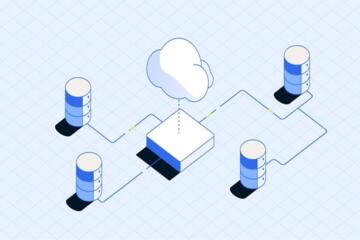
Modern software-as-a-service (SaaS) is no longer a monolithic application but a complex web of microservices, third-party APIs, and distributed databases. Security must be "baked in" at the design phase rather than "bolted on" later. This involves ensuring that every request, whether internal or external, is authenticated and authorized using short-lived tokens and granular permissions.

In practice, a secure architecture utilizes "Cellular Architecture" where users are partitioned into isolated units. For example, a fintech platform might isolate high-frequency trading data from general account metadata to limit the blast radius of a potential credential leak. Statistics from IBM’s 2023 Cost of a Data Breach Report show that organizations using AI and automation for security saved an average of $1.76 million compared to those that did not.
The Principle of Least Privilege
Every service and user should only have access to the specific resources required for their function. In a typical AWS environment, this means using IAM roles with specific policies rather than broad "Admin" access. By limiting scope, you prevent lateral movement by attackers.
Data Isolation Strategies
SaaS platforms usually choose between three isolation models: Silo (separate DB per tenant), Bridge (separate schema, shared DB), or Pool (shared schema with TenantID columns). For high-compliance industries like healthcare, the Silo model is the gold standard, ensuring no "noisy neighbor" or accidental data leakage across clients.
Encrypted Data Lifecycle
Data must be encrypted at rest (using AES-256) and in transit (TLS 1.3). However, advanced platforms now use "Always Encrypted" technology or Envelope Encryption where data remains encrypted even while being processed in memory, using services like AWS KMS or HashiCorp Vault.
API Gateway Hardening
The API is the front door to your SaaS. Implementing rate limiting, WAF (Web Application Firewall) rules, and schema validation at the gateway level (e.g., using Kong or Tyk) prevents common injection attacks and DDoS attempts before they reach your business logic.
Shift-Left Security Culture
Security is a shared responsibility. By integrating Static Application Security Testing (SAST) tools like Snyk or SonarQube directly into the GitLab/GitHub CI/CD pipeline, developers receive immediate feedback on vulnerable dependencies or hardcoded secrets before code is even merged.
Common Vulnerabilities
Many engineering teams prioritize "Time to Market" (TTM) over "Security Debt," leading to catastrophic failures. A frequent mistake is relying on Client-Side security checks; attackers can easily bypass browser-based validation to send malicious payloads directly to your backend. Another massive pain point is the "Broken Object Level Authorization" (BOLA), where a user changes an ID in a URL and accesses someone else's private data.
The consequences of these oversights are not just financial but reputational. In 2021, a major social platform suffered a leak because an API endpoint allowed scraping of public data due to lack of rate limiting. This resulted in millions of records being indexed by bad actors. Such incidents lead to churn rates exceeding 20% in the B2B sector, as trust is the primary currency of SaaS.
Practical Resolutions
To resolve identity issues, implement OpenID Connect (OIDC) and SAML 2.0 for Enterprise SSO. This offloads the risk of password storage to specialized providers like Okta or Auth0. On the infrastructure side, move toward Infrastructure as Code (IaC) using Terraform or Pulumi. This ensures your security groups and VPC configurations are versioned, audited, and immutable.
Implementing a "Zero Trust" model works because it assumes the network is already compromised. Practically, this looks like requiring Mutual TLS (mTLS) for communication between service A and service B. Tools like Istio or Linkerd service meshes can automate this, providing 100% encryption for all internal traffic without requiring developers to write custom code for it.
For vulnerability management, do not rely on annual audits. Use Automated Pentesting tools like Cobalt.io or Intruder. Continuous scanning ensures that when a new 0-day vulnerability like Log4j emerges, you have a fleet-wide inventory and patching status within minutes, not weeks. According to Gartner, 99% of firewall breaches through 2025 will be caused by misconfigurations, not architectural flaws.
Automated Secret Management
Hardcoded API keys are the #1 cause of cloud breaches. Using a secret manager like AWS Secrets Manager or Google Secret Manager allows for automatic rotation. If a key is leaked, it expires within 24 hours anyway, drastically reducing the window of opportunity for an attacker.
Multi-Factor Authentication (MFA)
Enforce MFA for all users, but specifically FIDO2/WebAuthn for administrative accounts. Traditional SMS-based MFA is vulnerable to SIM swapping. Moving to hardware keys like Yubico provides a physical layer of security that is nearly impossible to phish.
Logging and Observability
You cannot defend what you cannot see. Centralized logging via the ELK Stack (Elasticsearch, Logstash, Kibana) or Datadog allows for real-time anomaly detection. Set up alerts for "impossible travel" logins (e.g., a login from London and New York within 10 minutes) to catch account takeovers instantly.
Runtime Protection (RASP)
Runtime Application Self-Protection (RASP) tools sit inside the application and monitor execution. If an unexpected database query or system call is detected, the RASP can block the specific request without taking the whole server offline. This is critical for defending against unknown vulnerabilities.
Compliance as Code
For SaaS companies targeting SOC2 or HIPAA, compliance is often a manual nightmare. Using platforms like Vanta or Drata connects to your cloud stack and automatically gathers evidence of security controls. This reduces the audit preparation time from months to days.
Real-World Case Studies
Case 1: Fintech Scale-up Transition
A mid-sized payment processor faced frequent "scraping" attempts on their transaction endpoints. They implemented Cloudflare Bot Management and moved their entire backend to a private subnet reachable only via a VPN-protected Bastion host. Result: A 95% reduction in unauthorized API calls and successful SOC2 Type II certification within 6 months.
Case 2: Healthcare SaaS Data Shielding
A telehealth startup was storing patient notes in a shared database. After a security review, they migrated to a "Siloed" PostgreSQL approach using AWS RDS, where each clinic had its own encrypted instance. While infrastructure costs rose by 15%, they secured a $50M enterprise contract that required strict physical data separation. Result: Zero cross-tenant data incidents and 100% compliance with GDPR data residency requirements.
Security Tool Comparison
| Security Layer | Top-Tier Tools | Primary Benefit | Ideal For |
|---|---|---|---|
| Identity & Access | Okta, Auth0, Ping Identity | Secure SSO and MFA integration | B2B Enterprise SaaS |
| Vulnerability Scanning | Snyk, GitHub Advanced Security | Finds flaws in code and dependencies | DevOps teams |
| Cloud Security (CSPM) | Wiz, Orca Security | Detects cloud misconfigurations | AWS/Azure/GCP users |
| API Protection | Cloudflare, Akamai, Apigee | WAF, DDoS, and Bot protection | Public-facing APIs |
| Compliance Automation | Vanta, Drata, Thoropass | Continuous SOC2/ISO 27001 monitoring | Startups seeking trust |
Avoiding Common Mistakes
The biggest error is the "Castle and Moat" fallacy—the idea that once someone is inside your network, they are trusted. Instead, treat your internal network as hostile as the public internet. Another mistake is ignoring "Shadow IT," where developers spin up unmonitored test databases with real customer data. Always use data masking tools like Delphix to ensure non-production environments never contain PII (Personally Identifiable Information).
Don't build your own cryptography. It is a recurring trope where engineers try to write custom hashing algorithms or "obscure" their data. Use industry-standard libraries like Sodium or Bouncy Castle. Obscurity is not security; if your security relies on an attacker not knowing how your system works, you have already lost.
FAQ
Is single-tenant or multi-tenant more secure?
Single-tenant is inherently more secure due to physical isolation, but it is harder to scale and more expensive. Most modern SaaS uses a "Logical Multi-tenancy" where robust software-level checks ensure data separation while sharing resources.
How often should we perform pentesting?
Annual pentests are a compliance checkbox. For true security, perform "Point-in-time" testing after every major release and use continuous automated scanning for the interim periods.
Does SOC2 guarantee our SaaS is unhackable?
No. SOC2 is an audit of processes and controls. It proves you have a security framework, but it doesn't mean your code is free of bugs. Security is a continuous operational state, not a certificate.
How do we handle a data breach?
You must have an Incident Response Plan (IRP) ready. This includes technical containment, legal notification (meeting GDPR/CCPA timelines), and a PR strategy. Speed and transparency are key to maintaining customer trust.
Is serverless more secure than containers?
Serverless (like AWS Lambda) reduces the attack surface because you don't manage the OS. However, it introduces risks like "Event Injection." Both can be secure if configured with proper IAM roles and timeouts.
Author’s Insight
In my fifteen years of architecting cloud systems, I’ve found that the most sophisticated hacks usually exploit the simplest human errors—like an open S3 bucket or a developer's leaked Slack token. My best advice is to automate the "boring" parts of security. If a human has to remember to close a port or rotate a key, eventually, they will forget. Build a system that fails closed, not open, and always prioritize visibility over complexity. A simple, well-monitored system is vastly superior to a complex one that no one fully understands.
Conclusion
Securing a SaaS platform is a continuous journey of identifying risks, implementing automated controls, and fostering a security-first culture among developers. Focus on robust identity management, strict data isolation, and deep observability to protect your most valuable asset: customer trust. Start by auditing your current API permissions and implementing automated secret rotation today. By moving toward a Zero Trust architecture, you not only mitigate the risk of breaches but also create a competitive advantage that enables you to win enterprise-level clients who demand the highest standards of data protection.