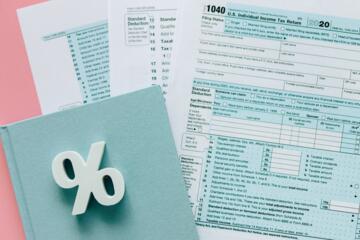
PMI Deduction In 2026
Private mortgage insurance, or PMI, is the monthly charge lenders add to conventional loans when the down payment is under 20%. It protects the lender, not the borrower. Government-backed loans carry their own versions: FHA mortgage insurance premiums, the VA funding fee, and the USDA guarantee fee.
Congress first made these premiums deductible in 2007, then renewed the rule in short bursts until it lapsed after the 2021 tax year. Nothing was deductible for 2022 through 2025. Section 70108 of the 2025 budget reconciliation law restored the deduction for tax years beginning after December 31, 2025, this time with no sunset.
Premiums paid from January 1, 2026 are treated as qualified residence interest. They go on Schedule A, line 8d, next to mortgage interest, and returns claiming them will be filed in early 2027.
A homeowner paying $160 a month in PMI has $1,920 of potential deduction for the year.
What Homeowners Misread
The income limit is tighter than most people expect. The deduction shrinks by 10% for each $1,000, or part of $1,000, that adjusted gross income exceeds $100,000. It vanishes above $109,000. For married couples filing separately the band runs from $50,000 to $54,500. Single filers and joint filers share the same $100,000 threshold, which, frankly, is hard on two-income couples.
The second misreading is that the deduction lowers tax for everyone under the limit. It is an itemized deduction. It helps only if total itemized deductions exceed the 2026 standard deduction: $16,100 for single filers, $24,150 for heads of household, and $32,200 for joint filers. A couple with $20,000 of mortgage interest and $8,000 of state and local taxes is still below the line.
Third, a deduction is not a credit. It reduces taxable income, so $1,920 of premiums in the 22% bracket trims the bill by about $422, not $1,920.
The paperwork depends on your loan servicer. Premiums of $600 or more are reported in Box 5 of Form 1098, the mortgage interest statement that arrives by the end of January. The insurance contract must have been issued after 2006, and the loan must be acquisition debt on a main or second home. Lender-paid mortgage insurance, where the cost is folded into a higher interest rate, produces no separate premium to deduct.
Working Out Your Benefit
Estimate AGI Before Year End
Adjusted gross income is the figure on line 11 of Form 1040, after items such as retirement plan deferrals and health savings account contributions but before the standard or itemized deduction. Add up wages, interest, and other income for 2026 and subtract those adjustments. If the result lands between $100,000 and $109,000, each extra $1,000 costs a tenth of the deduction. Rounding works against you: AGI of $104,200 counts as five thousands over, so half the premiums are lost.
Run The Itemizing Test
Total your likely Schedule A items: mortgage interest from Box 1 of Form 1098, state and local taxes up to the cap of about $40,400 for 2026, charitable gifts, and mortgage insurance after any phase-out reduction. Compare the sum with your standard deduction. Recent buyers have the best odds, because interest is highest in a loan’s first years. A $340,000 loan at 6.5% generates roughly $21,900 of interest in year one. You add the lines, compare the totals, and the answer is usually obvious.
Handle Upfront Premiums Correctly
FHA loans charge an upfront premium of 1.75% of the loan amount, typically financed into the balance. Under the rules that applied before the lapse, prepaid mortgage insurance is spread over 84 months or the loan term if shorter, so only a slice is deductible each year. On a $300,000 FHA loan the upfront premium is $5,250, or $750 a year. VA funding fees and USDA guarantee fees were treated as deductible in the year paid. Check the 2026 edition of IRS Publication 936 for confirmation.
Weigh Deduction Against Removal
For conventional loans, the Homeowners Protection Act lets a borrower request PMI cancellation once the balance reaches 80% of the home’s original value, and requires automatic termination at 78%. Removing a $160 monthly premium saves $1,920 a year in cash. Deducting it saves $230 to $420. The tax break softens the cost while PMI is unavoidable. It is never a reason to keep paying.
Two Household Examples
A single buyer. A first-time owner with AGI of $92,000 bought in January 2026 with 5% down and a $340,000 loan. Year-one interest is about $21,900. State income and property taxes total $9,000. PMI comes to $1,920. Itemized deductions reach $32,820, more than double the $16,100 standard deduction. Income is under $100,000, so the full premium counts. In the 22% bracket the PMI line reduces federal tax by roughly $422.
A married couple. Two earners with combined AGI of $106,300 hold an FHA loan with $2,400 of annual premiums. They are seven thousands over the threshold after rounding, so 70% is disallowed and $720 remains. Their mortgage interest is about $20,100, state and local taxes $8,500, charitable gifts $1,000. With the $720, itemized deductions total $30,320. That is below the $32,200 standard deduction. They take the standard deduction and the mortgage insurance write-off is worth nothing to them this year. Close. Not close enough.
Phase-Out By Income
| Adjusted Gross Income | Reduction | Share Deductible | Deduction On $2,000 Of Premiums |
|---|---|---|---|
| $100,000 or less | None | 100% | $2,000 |
| $100,001 to $101,000 | 10% | 90% | $1,800 |
| $102,001 to $103,000 | 30% | 70% | $1,400 |
| $104,001 to $105,000 | 50% | 50% | $1,000 |
| $106,001 to $107,000 | 70% | 30% | $600 |
| $108,001 to $109,000 | 90% | 10% | $200 |
| Above $109,000 | 100% | 0% | $0 |
For married taxpayers filing separately, halve the income figures: the reduction is 10% per $500 over $50,000, with nothing above $54,500.
Common Mistakes
Claiming premiums paid in 2025. The restored rule starts with the 2026 tax year. Amounts paid earlier remain non-deductible, and amending old returns will not change that.
Ignoring ways to lower AGI near the band. Raising pre-tax 401(k) deferrals or funding a health savings account before year end can pull income under $100,000. Someone at $101,500 who defers another $1,500 regains the full deduction, and the tax software rarely suggests it.
Deducting premiums on a rental. The rule covers a qualified residence. Mortgage insurance on an investment property is a rental expense on Schedule E under different rules.
Taking the entire upfront FHA premium in one year. Spread it as the rules require, or the return overstates the deduction.
Trusting Box 5 blindly. Servicers changed systems to resume reporting. Compare the figure with twelve months of statements.
FAQ
Is PMI tax deductible in 2026?
Yes, for premiums paid in 2026 and later, if you itemize and your adjusted gross income is $109,000 or less ($54,500 if married filing separately).
What is the income limit for the PMI deduction?
The full deduction applies up to $100,000 of AGI. It falls by 10% per $1,000 above that and ends above $109,000. Joint and single filers use the same figures.
Does FHA mortgage insurance qualify?
Yes. FHA annual and upfront premiums, VA funding fees, and USDA guarantee fees are qualified mortgage insurance, subject to the same income test.
Can I claim it with the standard deduction?
No. It is an itemized deduction on Schedule A and has no effect for filers who take the standard deduction.
Where do I find the amount I paid?
Box 5 of Form 1098 from your loan servicer, issued by January 31, 2027 for the 2026 tax year. Monthly statements show the same premiums.
Author’s Insight
Set beside the standard deduction, the restored write-off reaches a narrow group: recent buyers with large interest payments and income under about $105,000. The $100,000 threshold was written in 2006 and has never been indexed, so inflation has quietly shrunk the eligible population since then. For a typical qualifying household the saving is a few hundred dollars a year, useful but small next to the premium itself. Making the rule permanent mainly removes the annual guesswork that came with short extensions. The larger financial lever remains reaching 20% equity and cancelling the insurance.
Key Takeaways
- Mortgage insurance premiums paid from January 1, 2026 are deductible again as mortgage interest, with no expiry date.
- The deduction is full up to $100,000 of AGI, drops 10% per $1,000 above, and is gone past $109,000.
- It counts only for those who itemize and exceed the standard deduction of $16,100 single or $32,200 joint.
- PMI, FHA premiums, VA funding fees, and USDA guarantee fees qualify. Upfront FHA premiums are spread over 84 months.
- The amount appears in Box 5 of Form 1098 and goes on Schedule A, line 8d.
- Cancelling PMI at 80% loan-to-value saves far more than deducting it. This article is general education, not tax advice, so confirm details in IRS Publication 936 or with a tax professional.