Summary
The loan-to-value (LTV) ratio is one of the most important metrics lenders use to assess mortgage risk, yet many borrowers misunderstand how it works and why it matters. LTV directly affects interest rates, loan approval chances, private mortgage insurance (PMI), and refinancing options. A small change in LTV can translate into thousands of dollars in long-term costs. This article explains what LTV really means, how it is calculated, and how borrowers can strategically improve it.
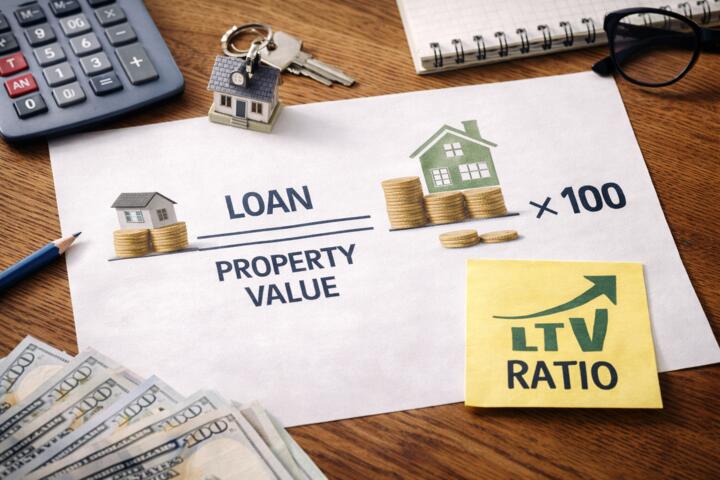
Overview: What Is Loan-to-Value (LTV) Ratio
The loan-to-value ratio measures how much of a property’s value is financed through debt.
Formula:
LTV = (Loan Amount ÷ Property Value) × 100
Simple example
-
Home value: $400,000
-
Mortgage: $320,000
-
LTV: 80%
From a lender’s perspective, LTV represents risk exposure. The higher the LTV, the less equity the borrower has and the greater the lender’s potential loss in case of default.
Why lenders care
-
Loans with LTV ≤ 80% typically qualify for better rates
-
Loans with LTV > 80% often require PMI
-
According to Freddie Mac data, default risk increases sharply above 90% LTV
Main Problems / Pain Points
1. Confusing LTV With Down Payment Size
Many borrowers think LTV only matters at purchase.
Reality:
LTV changes over time due to principal payments and property value fluctuations.
2. Ignoring LTV During Refinancing
Homeowners often refinance without checking current LTV.
Consequence:
Higher rates or rejected applications.
3. Overestimating Property Value
Borrowers rely on online estimates instead of lender appraisals.
Result:
Unexpectedly higher LTV than expected.
4. Not Understanding PMI Triggers
Many assume PMI disappears automatically.
Reality:
PMI removal is tied directly to LTV thresholds.
5. Treating LTV as a Fixed Number
LTV is dynamic, not static.
Solutions and Practical Recommendations
1. Understand Key LTV Thresholds
| LTV Level | Impact |
|---|---|
| ≤ 60% | Best rates, lowest risk |
| 61–80% | Standard conventional loans |
| 81–90% | PMI required |
| 91–97% | Limited programs, higher rates |
Why it works:
Each threshold directly influences pricing and approval.
2. Increase Down Payment Strategically
What to do:
Target at least 20% down when possible.
Why it works:
Avoids PMI and reduces interest costs.
Example:
On a $350,000 home, moving from 10% to 20% down can save $150–$250/month.
3. Reduce Principal Faster
What to do:
Make principal-only payments.
Why it works:
Directly lowers LTV over time.
Tools:
-
Bankrate amortization calculators
-
NerdWallet payoff tools
4. Use Property Appreciation Wisely
What to do:
Track market value increases.
Why it works:
Rising values reduce LTV even without extra payments.
Real example:
A home bought for $300,000 rising to $375,000 reduces LTV from 90% to 72%.
5. Remove PMI at the Right Time
What to do:
Request PMI removal at 80% LTV (or automatic at 78% for conventional loans).
Why it works:
Saves thousands annually.
6. Time Refinancing Based on LTV
What to do:
Refinance only after crossing key LTV thresholds.
Why it works:
Rates improve dramatically below 80%.
7. Understand Program-Specific LTV Rules
-
FHA loans: Up to 96.5% LTV
-
VA loans: Up to 100% LTV
-
Conventional loans: Best terms ≤ 80%
Mini-Case Examples
Case 1: First-Time Buyer Avoids PMI
Property: $420,000
Initial plan: 10% down (90% LTV)
Action:
Waited 6 months, increased savings to 20%.
Result:
-
No PMI
-
Rate reduced by 0.6%
-
Lifetime savings: ~$85,000
Case 2: Homeowner Uses Appreciation to Refinance
Original loan: $310,000 on $350,000 home (89% LTV)
Market value after 3 years: $420,000
New LTV: 74%
Result:
-
PMI removed
-
Rate dropped from 6.7% to 5.9%
-
Monthly savings: $280
Checklist: How to Manage LTV Effectively
| Step | Action |
|---|---|
| 1 | Calculate current LTV |
| 2 | Verify lender appraisal value |
| 3 | Identify LTV thresholds |
| 4 | Make principal payments |
| 5 | Track home value |
| 6 | Request PMI removal |
| 7 | Review refinance options |
Common Mistakes (And How to Avoid Them)
1. Trusting Online Estimates Only
Fix:
Use lender or licensed appraisals.
2. Refinancing Too Early
Fix:
Wait until LTV improves.
3. Ignoring PMI Terms
Fix:
Read PMI cancellation rules carefully.
4. Over-leveraging Equity
Fix:
Avoid cash-out refis that raise LTV unnecessarily.
5. Forgetting Market Risk
Fix:
Maintain buffer against price declines.
Author’s Insight
In real lending scenarios, LTV is often the silent decision-maker behind approvals, pricing, and insurance costs. I’ve seen borrowers with excellent credit still overpay simply because they ignored LTV thresholds. The smartest borrowers treat LTV as a controllable variable, not a fixed constraint. Managing it proactively creates leverage in every mortgage conversation.
Conclusion
Loan-to-value ratio is far more than a technical lending metric—it directly impacts affordability, flexibility, and long-term financial outcomes. By understanding how LTV works and actively managing it through payments, timing, and valuation awareness, borrowers can reduce costs and improve loan terms significantly. Treating LTV as a strategic tool rather than a static number is one of the most effective ways to optimize any mortgage.