AI Code And EU Liability
Directive (EU) 2024/2853 replaces the 1985 product liability rules. Member States must transpose it by 9 December 2026, and it governs products placed on the EU market or put into service after that date. Its central change for developers sits in the definition of “product”: software now counts, including firmware, apps, AI systems, and software delivered as a service.
Liability under the directive is strict. An injured person must show a defect, damage, and a causal link. Negligence is irrelevant. A company that followed every internal process still pays if its product was less safe than the public is entitled to expect and someone was harmed.
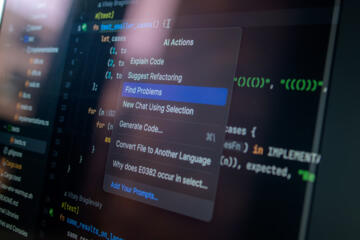
The text never asks how code was written. A function suggested by GitHub Copilot, Cursor, or Claude Code and merged into a release is the manufacturer’s code for liability purposes, exactly as if a staff engineer had typed it.
The author of the code is legally invisible. The shipper is not.
What Teams Misjudge
Many developers expect the assistant’s vendor to share the blame. Under this directive that route is narrow. Claims belong to natural persons who suffer death, personal injury including medically recognised psychological harm, damage to property not used exclusively for professional purposes, or destruction or corruption of non-professional data. A software company whose build broke because of a bad suggestion has suffered a business loss, which falls outside the directive and back into contract law, where vendor terms usually disclaim almost everything.
A second misjudgment concerns open source. Free and open-source software developed or supplied outside a commercial activity is excluded. Once a company integrates that library into a commercial product, though, the company answers for defects in it. AI assistants pull in dependencies readily, and it rarely gets a second look in code review.
Third, release is not the end of responsibility. The manufacturer stays liable for defects that arise from updates within its control, and from failing to supply security updates needed to keep the product safe. A substantial modification after 9 December 2026 can bring an older product under the new regime.
The directive also interacts with other EU rules. Non-compliance with mandatory safety requirements, such as those in the Cyber Resilience Act (Regulation (EU) 2024/2847), can trigger a presumption that the product was defective. Courts may order disclosure of relevant evidence, and a manufacturer that fails to produce it faces the same presumption. Where technical complexity makes proof excessively difficult, a claimant need only show that defect or causation is likely.
Reducing Your Exposure
Classify What You Ship
List each product reaching EU users and ask two questions: can a failure injure someone, damage household property, or destroy personal data, and is it supplied in the course of commercial activity? A recipe app carries little exposure. A battery management routine, an insulin-dose calculator, or a photo backup service carries plenty. Rank modules by harm potential, and apply the stricter controls below to the top tier first.
Keep Provenance And Review Records
Disclosure orders make documentation a defensive asset. Record which commits contain machine-generated code, who reviewed them, and which tests ran. Git trailers such as Co-Authored-By, pull request templates with a mandatory review field, and retained CI logs are enough. For safety-relevant modules, require a second human reviewer and keep the test evidence for at least ten years, matching the general long-stop period. Latent personal injury claims can run to 25 years.
Test For Foreseeable Misuse
Defectiveness is judged against reasonably foreseeable use, safety-relevant cybersecurity requirements, and any ability of the product to keep learning after deployment. Generated code tends to handle the expected path and skip odd inputs. Add static analysis with tools such as CodeQL or Semgrep, fuzz the interfaces that touch hardware or user data, and write tests for the misuse cases a consumer would plausibly stumble into. You scan the code, fuzz the inputs, and the review notes become your evidence.
Fix The Supply Chain Paperwork
Generate a software bill of materials in CycloneDX or SPDX format for every release so you know which components you answer for. Check your suppliers’ contracts for recourse terms. The directive lets a manufacturer agree to waive recourse against a micro or small enterprise that supplied a defective software component, so small vendors should ask for that clause and larger integrators should price it in. Then read your insurance policy. Many product liability policies were written for physical goods, which, frankly, few software firms discover before a claim.
Two Product Scenarios
A connected heater controller. A 40-person hardware company ships a firmware update in early 2027. One routine, drafted by a coding assistant and approved in a quick review, mishandles a sensor timeout and leaves a heating element on. A customer’s kitchen is damaged. The household claims for the property loss. The court orders disclosure of design and test records. The company can show the commit and reviewer but has no test for the timeout case. That gap does not prove a defect on its own, yet it makes rebutting one hard. The assistant’s vendor is not a party. The company’s recourse against it depends on a contract that excludes such claims.
A photo backup app. An eight-person startup uses an AI agent to write a storage migration script. A path-handling bug deletes originals for several thousand consumer accounts. Under the old rules, lost data was not recoverable damage and a €500 threshold applied to property claims. Under the new directive, destruction of personal, non-professional data counts, with no lower threshold. Business customers on the same service must rely on their contracts instead. Same bug, two legal routes.
Old Vs New Rules
| Issue | 1985 Directive | Directive 2024/2853 | Effect On AI-Assisted Code |
|---|---|---|---|
| Software as product | Unclear, varied by country | Expressly included, any delivery model | Apps, firmware, and SaaS in scope |
| Recoverable damage | Injury, consumer property above €500 | Adds psychological harm and personal data loss, no threshold | Data-destroying bugs become claims |
| Proof | Claimant proves defect and causation | Disclosure orders and rebuttable presumptions | Review and test records decide cases |
| After release | Judged at time of circulation | Covers updates and missing security patches under manufacturer control | Each generated patch carries exposure |
| Open source | Not addressed | Non-commercial supply excluded, integrator liable | Auto-added dependencies are yours |
| Time limits | 3 years, 10-year long stop | 3 years, 10-year long stop, 25 years for latent injury | Longer evidence retention |
Common Mistakes
Relying on terms of service. Clauses that exclude or limit liability toward injured persons have no effect under the directive. A disclaimer in the app’s licence does not shield the maker from a consumer’s injury or data claim.
Assuming a non-EU company is out of reach. Where the manufacturer sits outside the Union, the importer, the authorised representative, and in some cases the fulfilment service provider or distributor can be held liable instead.
Treating “the model wrote it” as a defence. The development-risk defence asks if the defect was discoverable given scientific and technical knowledge at release. A bug that a standard test would have caught does not qualify.
Deleting AI session logs and review comments to tidy up. Missing evidence invites the presumption of defect once a court orders disclosure.
Waiting for national law. Late transposition in a Member State affects procedure more than exposure, since the directive fixes its application date for products released after 9 December 2026.
FAQ
Is software a product under the new EU Product Liability Directive?
Yes. Software, including AI systems, firmware, and software supplied as a service, is expressly covered for products placed on the market after 9 December 2026.
Who is liable for AI-generated code that causes harm?
The manufacturer of the product containing it. The directive does not distinguish between human-written and machine-written code.
Can I sue the AI coding tool vendor under the directive?
A business generally cannot, because the directive compensates natural persons for injury, consumer property damage, and personal data loss. Commercial losses are a contract matter.
Does the directive apply to open-source projects?
Not to software developed or supplied outside a commercial activity. A company that builds such code into a commercial product is liable for it.
What happened to the EU AI Liability Directive?
The Commission withdrew that separate proposal in 2025. The revised Product Liability Directive is now the main EU-level route for harm caused by defective software and AI.
Author’s Insight
Reading the directive’s text against how coding assistants are used, the law is neutral about tools and demanding about outcomes. That neutrality shifts weight onto process evidence, because disclosure orders and presumptions reward whoever can show how a release was reviewed and tested. Machine-generated code changes the volume of what must be reviewed more than the legal standard applied to it. No court has yet ruled on a claim under the new regime, so how judges will treat “excessive difficulty” of proof for complex software remains open. Until case law arrives, records are the only variable a manufacturer fully controls.
Final Thoughts
- From 9 December 2026, software released to the EU market carries strict liability for injury, consumer property damage, and personal data loss.
- Code origin is irrelevant. The company that ships the product is the manufacturer.
- Courts can order disclosure and presume a defect where evidence is missing or safety rules were breached.
- Keep provenance, review, and test records for safety-relevant modules, and maintain a bill of materials for each release.
- Liability to injured persons cannot be excluded by contract, and vendor terms seldom give recourse.
- Check insurance cover for software-caused harm. This article is general education, not legal advice, and national laws transposing the directive may differ in procedure.