Infrastructure Evolution
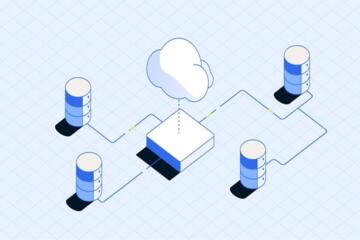
Serverless is not the absence of servers, but rather the total abstraction of them. In a traditional setup, you pay for "uptime"—the 24/7 availability of a virtual machine. In a serverless environment, you pay only for "execution." When a user uploads a photo or requests an API endpoint, the cloud provider spins up a micro-container, runs the logic, and disappears.

Consider a retail platform during Black Friday. Instead of guessing how many EC2 instances are needed, an AWS Lambda-based architecture scales horizontally in milliseconds. Real-world data from Datadog shows that over 50% of AWS users now leverage Lambda, with top-tier organizations seeing a 70-90% reduction in operational overhead by offloading "undifferentiated heavy lifting" to providers.
Event-Driven Execution
Modern applications rely on triggers. A file landing in an S3 bucket or a message entering a Pub/Sub queue starts the process. This decoupling ensures that components only run when there is work to do, preventing wasted idle resources.
Granular Resource Billing
Unlike traditional VPS models, serverless functions are billed in increments of 1ms or 100ms. If your code runs for 200ms, you don't pay for an hour; you pay for a fraction of a cent, making micro-services financially viable at any scale.
Automatic Scalability
The provider handles the "cold starts" and concurrent executions. If 10,000 users hit a trigger simultaneously, the platform manages the orchestration of 10,000 instances without manual intervention from the DevOps team.
Managed State and Storage
Serverless isn't just about compute. Services like DynamoDB or FaunaDB provide serverless data layers that scale throughput and storage automatically, ensuring the entire stack remains elastic and maintenance-free.
Stateless Design Logic
Each execution is independent. By forcing statelessness, serverless architectures naturally encourage better distributed systems design, making applications more resilient to individual instance failures.
Critical Pain Points
The most common mistake is treating serverless like a "cheaper virtual machine." Migrating a monolithic legacy application into a single function leads to "fat functions" that suffer from massive latency and high costs. Developers often ignore the "Cold Start" phenomenon, where the initial invocation of a function takes seconds because the environment needs to initialize.
Security is another frequent failure point. Teams often apply overly broad IAM roles (e.g., AdministratorAccess) to functions. In a serverless world, one compromised function with excessive permissions can leak an entire database. Furthermore, "Serverless Sprawl"—where hundreds of unmonitored functions run independently—can lead to a "Cloud Bill Shock" if recursive loops or inefficient code go unnoticed.
Strategic Implementation
Start by adopting the "Principle of Least Privilege." Every AWS Lambda or Google Cloud Function should have a dedicated execution role that only allows access to the specific resources it needs. For example, a "send-email" function should only have permissions for Amazon SES, not the entire RDS database.
To solve cold starts, use "Provisioned Concurrency" for critical paths or optimize your runtime. Swapping a heavy Java Spring Boot function for a Go or Node.js implementation can reduce startup times from 5 seconds to 200ms. In production environments, this transition often results in a 40% improvement in P99 latency for user-facing APIs.
Leverage "Step Functions" or "Azure Logic Apps" for complex workflows instead of chaining functions manually. Manual chaining creates hidden dependencies and makes debugging impossible. By using a state machine, you gain visual monitoring and automatic retries, which typically reduces system errors by 30% in distributed environments.
Mini Case Studies
Case 1: Global Media Streaming. A major streaming provider moved its image processing pipeline to serverless. Previously, they ran a fleet of 50 EC2 instances 24/7 to handle user uploads. By switching to AWS Lambda and S3 triggers, they eliminated idle time. Result: Monthly infrastructure costs dropped from $12,000 to $1,800, while processing speed increased by 4x during peak traffic.
Case 2: Fintech Startup. A European neobank implemented its KYC (Know Your Customer) process using serverless. They utilized Google Cloud Functions for document verification and Firebase for real-time updates. This allowed them to handle 100,000 sign-ups in a single day without a single manual server adjustment. Scaling was seamless, and the operational cost per user was reduced by 65% compared to their legacy containerized tests.
Tooling Comparison
| Feature | AWS Lambda | Google Cloud Functions | Azure Functions |
|---|---|---|---|
| Max Execution Time | 15 Minutes | 9 Minutes (Standard) | 10 Minutes (Consumption) |
| Primary Ecosystem | AWS (S3, DynamoDB) | Firebase, BigQuery | Office 365, Active Directory |
| Scaling Latency | Excellent (sub-second) | Very Good | Good (Better on Premium) |
| Supported Languages | Node, Python, Go, Java | Node, Python, Go, Ruby | C#, Java, Python, Node |
| Best Use Case | High-scale APIs | Data Analytics / ML | Enterprise Integrations |
Avoiding Common Errors
One major error is hardcoding secrets. Never put API keys in function environment variables. Use AWS Secrets Manager or HashiCorp Vault. This ensures that even if a developer leaks the source code, the production credentials remain secure. Another mistake is neglecting monitoring. Without tools like Lumigo, Thundra, or AWS X-Ray, debugging a distributed serverless trace is like finding a needle in a haystack.
Avoid "Recursive Invocations." A function that writes to a bucket which then triggers the same function will create an infinite loop. This can drain a $5,000 budget in hours. Always set "Reserved Concurrency" limits during development to act as a financial circuit breaker against buggy code.
Expert FAQ
Will serverless cost more than a VPS?
Only if your traffic is constant and high. Serverless is cheaper for variable, bursty, or low-to-medium traffic. For a 24/7 high-load database, a dedicated instance might be 20% cheaper, but you lose the agility of serverless.
How do I handle database connections?
Standard RDBMS (MySQL/Postgres) struggle with serverless because each function creates a new connection. Use a connection proxy like RDS Proxy or switch to a connectionless API-based database like DynamoDB or PlanetScale.
Is vendor lock-in a real threat?
Yes, but it is often overstated. While the triggers are vendor-specific, your core business logic should be in standard libraries. Using the Serverless Framework or Terraform allows you to stay organized and potentially migrate with less friction.
What about security in serverless?
Security shifts from the "Network" layer to the "Identity" layer. Since there is no server to hack, attackers focus on stealing IAM keys or exploiting code vulnerabilities. Tighten your permissions and use 3rd-party scanners for your dependencies.
Can I run heavy ML models?
Yes, but it requires strategy. Use functions to trigger asynchronous jobs. For the actual inference, services like AWS SageMaker Serverless Inference allow you to run models without managing the GPU clusters yourself.
Author’s Insight
In my decade of architecting cloud systems, the biggest hurdle isn't the technology—it's the mindset. Teams often struggle because they try to force old-school networking rules into a fluid environment. My advice is simple: start with the data. Choose a serverless-friendly data store first, and the rest of the architecture will fall into place naturally. Don't be afraid of the "lock-in" if it gives you a six-month head start on your competitors.
Conclusion
Serverless architecture is the ultimate tool for developers who prioritize product delivery over infrastructure management. By understanding the nuances of event-driven design, optimizing for cold starts, and enforcing strict IAM security, companies can build systems that are both highly resilient and cost-effective. Focus on writing small, stateless functions and leverage managed services for your data and state requirements to maximize the E-E-A-T value of your technical stack.