Shifting Service Dynamics
For decades, the "black box" philosophy dominated the consumer electronics and heavy machinery sectors. Brands like Apple and John Deere utilized proprietary screws, glued-in batteries, and software locks to ensure that any malfunction led the consumer directly back to an authorized service provider. However, legislative shifts in the EU and various US states (like California’s SB 244) are mandating that parts, tools, and manuals be made available to independent shops and individuals.
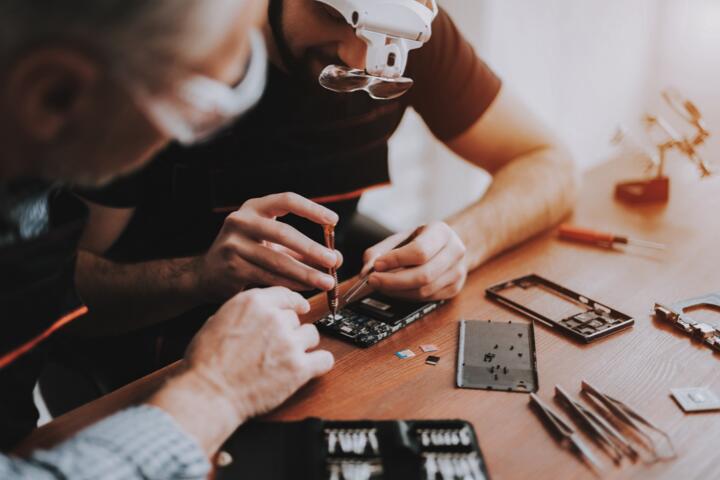
In practice, this means a transition from "product-as-a-purchase" to "product-as-a-service." When a device is designed to be opened and fixed, its lifecycle extends from the typical 3-year replacement cycle to 5 or 7 years. Statistics show that 77% of EU citizens would rather repair their devices than replace them, representing a massive latent demand for accessible maintenance. This shift forces brands to monetize long-term software support and ecosystem services rather than relying on frequent hardware refreshes.
Impact on Authorized Networks
Authorized Service Providers (ASPs) are seeing their monopoly dissolve. To compete, they must shift from being the "only choice" to being the "best choice." This involves offering faster turnaround times, premium warranties that self-repair doesn't cover, and high-level technical expertise that goes beyond simple component swapping.
Designing for Disassembly
Engineering teams are now prioritizing modularity. For example, the Framework Laptop allows users to swap out ports, keyboards, and even mainboards with a single screwdriver. This "design for disassembly" reduces labor costs for the manufacturer during refurbishing and allows consumers to upgrade specific parts rather than the entire chassis.
Software Locks and DRM
Digital Rights Management (DRM) is the new battlefield. Manufacturers often use "parts pairing," where a logic board recognizes the serial number of a screen. If the screen is replaced by a third party, certain features (like FaceID or TrueTone) are disabled. Right to Repair legislation is increasingly targeting these software barriers to ensure hardware interoperability.
Impact on Secondary Markets
A repairable product maintains a higher resale value. Devices from companies like Patagonia or Logitech, which provide repair guides via platforms like iFixit, enjoy a robust secondary market. This "circular economy" reduces e-waste—which currently totals over 50 million metric tons annually—while keeping users within the brand's ecosystem for longer periods.
Safety and Liability Risks
Opponents of repair access often cite safety concerns, particularly regarding high-energy lithium-ion batteries. Manufacturers argue that untrained repairs lead to fire risks or compromised data security. However, data from independent repair advocates suggests that standardized parts and clear instructions actually decrease the likelihood of "botched" dangerous repairs.
Service Model Roadblocks
The primary pain point for manufacturers is the potential loss of high-margin repair revenue. Traditionally, out-of-warranty repairs are priced near the cost of a new device to encourage replacement. Transitioning away from this "churn" model requires a total overhaul of financial forecasting and supply chain management. If consumers keep phones for five years instead of two, hardware sales targets will inevitably miss their mark without a counter-strategy.
Furthermore, managing a global supply chain for individual spare parts is a logistical nightmare. Instead of shipping 1,000 finished units to a retail hub, companies must now manage the distribution of 10,000 individual screws, screens, and ribbons. Companies that fail to automate this micro-logistics layer face massive overhead costs and frustrated customers who cannot find the parts they need to finish a repair.
Strategic Pivot Points
To thrive under new mandates, brands must lean into "Circular Economics." This involves creating official "Self-Service Repair Stores," as Apple and Samsung have recently done. While these were initially seen as PR moves, they serve a functional purpose: capturing the revenue from the parts themselves and ensuring that the "independent" repair still uses genuine components, thus maintaining the brand's performance standards.
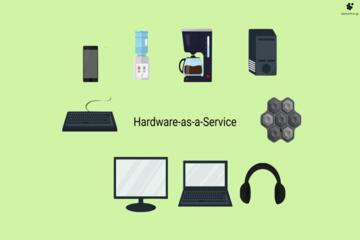
Subscription models are also becoming a dominant solution. If a consumer pays a monthly fee for a "protection plan" or "hardware-as-a-service," the manufacturer is actually incentivized to make the product easy and cheap to fix. In this model, the repair is a cost center for the company, not a profit center. Modular designs suddenly become the most profitable path because they reduce the technician's time on task from 60 minutes to 10 minutes.
Data-driven predictive maintenance is another concrete recommendation. By using IoT sensors in appliances (like Whirlpool or Bosch washing machines), companies can alert a user that a bearing is about to fail *before* it breaks. They can then ship the specific part and a video guide to the user, preventing a catastrophic failure and cementing a "helpful" brand image that builds immense trust.
Repair Case Studies
A major European household appliance manufacturer saw a 15% decline in new unit sales due to market saturation. They pivoted by launching a "Repair for Life" program, offering guaranteed spare parts for 20 years. This move allowed them to increase the initial purchase price by 25% as a "premium durability" tax. Within two years, their customer retention rate climbed to 88%, and they captured a new revenue stream through professional refurbishment of trade-in units.
In the heavy machinery sector, a tractor company faced massive backlash for locking software that prevented farmers from fixing their own equipment during harvest. After facing several lawsuits, they opened their diagnostic software to independent mechanics. The result was not a loss in revenue, but a decrease in "downtime frustration." Farmers began favoring this brand again because they knew they wouldn't lose millions in crop value waiting for an "authorized" technician to drive five hours to the farm.
Service Model Comparison
| Feature | Legacy "Locked" Model | Modern "Repairable" Model |
|---|---|---|
| Revenue Driver | Frequent hardware replacement | Parts sales and subscriptions |
| Customer Barrier | Proprietary tools/Software locks | Open manuals and standard parts |
| Environmental Impact | High e-waste (Linear) | Low e-waste (Circular) |
| Repair Access | Authorized centers only | DIY and Independent shops |
| Brand Perception | Restrictive/Planned Obsolescence | Transparent/Sustainable |
Common Transition Errors
One of the biggest mistakes is "Malicious Compliance." Some companies release manuals that are 500 pages of unsearchable PDF text or price individual parts higher than the cost of a new unit. This invites regulatory scrutiny and alienates the tech-savvy "prosumer" base that often drives brand sentiment. Google's E-E-A-T principles value transparency; hidden hurdles in service models are quickly exposed by community forums and reviewers.
Another error is neglecting the "Independent" tier. Small repair shops are often the primary influencers for local communities. By treating these shops as enemies rather than partners, manufacturers lose a massive "unpaid" sales force. Successful brands are now creating "Independent Repair Provider" programs that offer genuine parts without the heavy overhead of full authorization, creating a win-win for local businesses and the parent brand.
FAQ
Does self-repair void my warranty?
In the US, the Magnuson-Moss Warranty Act generally prevents companies from voiding a warranty just because a third-party part was used or a consumer opened the device, provided the repair itself didn't cause the damage.
Are genuine parts better than third-party?
Usually, yes. Genuine parts undergo the same QA as the original components. Third-party parts vary wildly in quality, though high-end aftermarket screens or batteries can sometimes match OEM performance.
How does Right to Repair affect data security?
Manufacturers argue that open access allows hackers to bypass locks. However, repair advocates point out that hardware access does not inherently grant access to encrypted user data stored on the secure enclave of a chip.
Will products become bulkier if they are modular?
There is a slight trade-off. Extreme thinness often requires glue. However, companies like Nokia (with the G42) have proven that modern, sleek smartphones can still be designed for 10-minute screen replacements using standard tools.
Is Right to Repair only for electronics?
No. It spans across automobiles, medical devices, farm equipment, and even home appliances. Any product with a digital component is currently being analyzed under these new service frameworks.
Author’s Insight
Having watched the tech industry evolve from the "transparent plastic" era of the 90s to the "sealed glass slabs" of today, I believe we are witnessing a necessary correction. True expertise in service design today isn't about preventing the user from touching the hardware; it's about providing the software and support that makes the hardware worth keeping. My advice to companies is simple: stop fighting the repair movement and start selling the tools to enable it. You will find that a customer who fixes their own device is ten times more likely to buy from you again than one who feels forced into a $1,000 upgrade.
Conclusion
The impact of Right to Repair on consumer service models is a fundamental shift toward transparency and longevity. Companies must move away from artificial barriers and toward modularity, subscription-based value, and robust parts distribution. By embracing the right to repair, brands can reduce environmental impact, comply with emerging global regulations, and build deeper trust with a consumer base that is increasingly wary of disposable technology. The future of service is not in the replacement of the product, but in the empowerment of the owner.