Graph Databases In Plain Terms
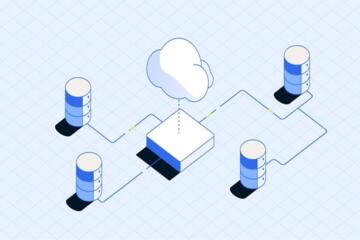
Graph databases represent entities as nodes and relationships as edges, then index both so queries can traverse connections without stitching many joins together. In SQL, relationships often live in foreign keys across multiple tables, so multi-hop questions become long join chains. In document stores, relationships may be embedded or referenced, which can work for shallow lookups but often breaks down when you need variable-length paths or neighborhood queries.
A practical example: suppose you track “patient,” “test result,” “variant,” and “medication.” A graph query can start at a patient node, follow edges to variants, then follow edges to other patients who share those variants, and finally filter by medication exposure. In SQL, you can do this with joins and recursive queries, but the query shape grows with each additional hop, and performance depends heavily on indexes and query planner choices.
Graph systems also differ in how they model direction, multiplicity, and properties. An edge can carry attributes like “relationship type,” “timestamp,” or “confidence score,” which matters when you need to filter by recency or data quality. That edge-level metadata is where many “graph vs SQL” comparisons get fuzzy, because SQL can store it too, just not in the same traversal-first way.
One incidental detail: if you’ve seen Cypher examples, you may remember the pattern “MATCH (a)-[r]->(b)” from Neo4j docs; the syntax nudges you toward thinking in paths rather than rows. That mental shift affects how you design indexes, constraints, and query patterns.
Common Pain Points And Misreads
Teams usually reach for graph databases after they hit query patterns that feel awkward in relational schemas: variable-length traversals, “find me all connected things within N steps,” and entity resolution across messy identifiers. The misread happens when people assume graph databases are a universal replacement for SQL or NoSQL. Graph storage helps when relationships dominate the question shape, not when the workload is mostly single-entity reads or fixed-schema analytics.
Another pain point is the “join explosion” effect. In SQL, a query that follows multiple relationship hops can require several joins, and each join can multiply intermediate result sizes. Even with good indexing, the planner may still choose costly join orders, and the query can become brittle as the schema evolves. Graph traversal engines aim to keep the work closer to the neighborhood you actually need, but they still pay for expanding frontiers when the graph is dense.
Supporting technologies matter. Graph performance depends on index choices for node keys, edge types, and property filters, plus the query engine’s traversal strategy. If you store edges with high-cardinality properties and then filter on them late, you can force the engine to explore too many candidates. A mild frustration many teams report: the docs show a clean traversal, then the real dataset has millions of edges per node type, and the “simple” query becomes a memory problem.
Data modeling also trips people up. If you model everything as nodes and every attribute as an edge property, you may create a graph that is hard to index and slow to query. If you model everything as nodes with embedded properties, you may lose the ability to express relationship-specific constraints like “only edges with status=active.” Graph databases can handle both, but the trade-offs show up in query latency and operational complexity.
When Graph Fits Better Than SQL
Graph databases tend to fit when the core questions are about connectivity, not just attributes. Examples include fraud rings, supply-chain relationships, identity graphs, knowledge graphs, and clinical decision support graphs where you need to traverse “evidence” links. The key is that the query needs to follow edges whose length is not fixed at design time, or whose path depends on data values.
Graph queries also match well with “pattern matching” over relationships. You might search for a subgraph pattern like “a patient connected to a medication through an exposure edge, and connected to a diagnosis through a diagnosis edge, where the diagnosis occurred after exposure.” SQL can express this, but the query often becomes a multi-join with careful date predicates and deduplication logic.
Graph systems can reduce the need for recursive SQL in some cases. Recursive common table expressions exist in many SQL engines, but they can be hard to tune and can produce large intermediate results. Graph traversal engines often include built-in mechanisms for limiting depth, controlling expansion, and pruning candidates based on predicates.
One more practical signal: if your application code spends time building join graphs in the middle tier, then sending back a final list, you may be re-implementing traversal logic outside the database. Moving traversal into the graph query layer can reduce round trips and simplify correctness, though it also shifts load to the database.
Solutions And Advice For Evaluation
Start With Query Shape Tests
Pick 10–20 representative queries that reflect real user workflows, then categorize them by access pattern: single-entity lookup, fixed join depth, variable-length traversal, and neighborhood expansion. Graph databases usually win when variable-length traversal and multi-hop filtering dominate. For each query, capture baseline latency and explain plans in SQL, then prototype the same logic in a graph query language.
Use realistic limits during testing. If a “within 3 hops” query returns tens of thousands of nodes in production, you should test with the same depth and apply the same filters. A small aside from a common evaluation setup: teams often test with synthetic graphs that are too sparse, then discover that real graphs have heavy-tailed degree distributions, where a few hubs dominate runtime.
Track not just average latency but tail latency (p95, p99). Graph traversals can have unpredictable cost when the frontier expands, and tail latency often reveals index or pruning problems.
Model Relationships With Edge Types
Design edge types and directions based on the questions you will ask. If you need “causal evidence” versus “temporal association,” separate them into different edge types rather than storing a generic edge with a property filter. Property filters can work, but edge-type separation improves index selectivity and reduces wasted traversal.
Decide early how you represent time. Many graph workloads require “as-of” logic, so you may store timestamps on edges and then filter by range during traversal. If you need frequent “current state” queries, you may also maintain derived edges or materialized views, which adds operational overhead.
For teams using Neo4j, a practical detail: constraints and indexes often use node labels and property keys, and the query planner behavior depends on those definitions. In one project I reviewed (version 5.12 of a Neo4j deployment), missing indexes caused a traversal to scan far more nodes than the query text suggested.
Plan For Indexing And Cardinality
Graph performance depends on indexing node keys and frequently filtered properties, plus controlling which properties are used in predicates. Before migrating, estimate cardinality: how many nodes per entity type, how many edges per relationship type, and the degree distribution (how many connections the busiest nodes have). If you cannot estimate, sample the dataset and compute approximate counts.
During prototyping, watch for “late filtering.” If the query expands to a large frontier and only then filters by a property, you may see slowdowns. Rewrite queries to apply selective predicates earlier when the query language supports it, and consider storing denormalized edge properties that match common filters.
Also plan for write patterns. Graph databases can handle writes, but high-frequency edge updates can create contention and index maintenance costs. If your workload is mostly append-only events, you may store events as edges and periodically roll up state, which changes the query strategy.
Use A Migration Path, Not A Rewrite
Adopt a phased approach: start with read-heavy features that rely on traversal, keep the source of truth in the existing system, and sync data into the graph. For example, you can mirror identity relationships, then build a “connected entities” endpoint that reads from the graph while other endpoints still read from SQL.
Define data ownership and reconciliation rules. If identifiers change, you need a strategy for edge updates and node merges. Graph merges can be expensive, so you may prefer stable surrogate keys and treat external identifiers as properties that can be updated.
Operationally, plan for backups, schema evolution, and monitoring. Graph queries can be sensitive to parameter choices, so you should log query parameters and measure performance regressions after schema changes.
Case Examples From Realistic Scenarios
Identity Resolution For Shared Records
A healthcare-adjacent data team maintains patient records from multiple sources. In SQL, they store demographics in one table and source-specific identifiers in another, then run multi-join queries to find “possible matches” across sources. The pain point appears when they need transitive closure: if A matches B and B matches C, they want to group A, B, and C even when A and C never share the same identifier directly.
They prototype a graph where nodes represent person entities and edges represent “same person candidate” links with a confidence score and timestamp. The traversal query finds connected components under a confidence threshold. In testing, they observe that performance depends on how many candidate edges each person has; after they add a rule to cap low-confidence edges, query time becomes stable.
Supply-Chain Links With Variable Depth
A compliance team tracks suppliers, contracts, and ownership relationships. Their SQL queries handle fixed-depth joins for simple reports, but investigations require variable depth: “show all entities connected through ownership links up to 4 steps, then filter by contract status.” The join-based approach becomes slow when the ownership graph has hubs.
They model suppliers and legal entities as nodes and ownership and contract relationships as typed edges. The traversal query limits depth and applies status filters during traversal. In their evaluation, the biggest improvement comes from moving the “connected within N steps” logic into the graph query layer and reducing the amount of post-processing done in application code.
Comparison Table And Decision Checklist
| Decision Factor | SQL Strength | Graph Strength | Watch For |
|---|---|---|---|
| Query shape | Fixed joins, aggregations, reporting | Multi-hop traversal, pattern matching | Graph cost grows with frontier size |
| Schema evolution | Migrations with clear tables | Flexible properties on nodes/edges | Inconsistent modeling hurts indexing |
| Indexing | B-tree and composite indexes | Node/edge indexes and type selectivity | Late filters cause slow traversals |
| Operational fit | Mature tooling for SQL workloads | Traversal-specific query planning | Monitoring and tuning differ from SQL |
Step-by-step checklist for a cautious evaluation:
- Collect 10–20 production queries and label each by traversal depth (fixed vs variable) and expected result size.
- Estimate node and edge counts per type, plus degree distribution for the top 1% highest-degree nodes.
- Prototype graph queries with the same filters and depth limits, then compare p95 latency and query plan behavior.
- Stress-test with realistic “hub” nodes and confirm that pruning rules cap frontier expansion.
- Define a data sync plan (source of truth, update frequency, reconciliation for merges) before any cutover.
- Run a failure-mode test: what happens when the graph is missing edges or has stale timestamps.
Common Mistakes That Undermine Trust
One frequent mistake is treating graph databases as a performance fix for poorly written SQL. If the SQL query is missing indexes or uses non-sargable predicates, the graph prototype may look better simply because it changes the query shape. The evaluation should compare like-for-like logic and use proper indexing in both systems.
Another mistake is ignoring data quality and identity mapping. Graph traversals amplify linkage errors: a single incorrect edge can connect large subgraphs. If you store confidence scores on edges, you need consistent thresholds and audit trails, or the graph will produce results that look coherent but are wrong.
Teams also underestimate the cost of schema decisions. If you later decide that a relationship should be an edge type rather than a property filter, you may need to remodel or backfill. A mild annoyance shows up when teams discover that their “quick prototype” used generic edge labels, then tuning becomes harder because indexes cannot target the right categories.
Finally, avoid promotional migration plans that skip observability. Graph query latency can vary with parameters and graph density, so you need query-level metrics, timeouts, and logging. Without those, you cannot tell whether the graph is faster or just less visible when it fails.
FAQ
Do Graph Databases Replace SQL?
Graph databases usually complement SQL rather than replace it. SQL remains strong for fixed-schema reporting, transactional integrity patterns, and large-scale aggregations, while graph systems focus on traversals and relationship-centric queries.
What Data Model Works Best For Health Data?
Model clinical entities as nodes and clinical relationships as typed edges, then store time and provenance on edges when you need “as-of” logic. If you need strict auditability, keep provenance fields and define how confidence thresholds affect traversal results.
How Do You Prevent Slow Traversals?
Use depth limits, apply selective predicates early, index the properties you filter on, and cap expansion from high-degree nodes. Testing with hub nodes from a real sample often reveals performance issues before production.
Can You Query Graphs With SQL?
Some systems expose SQL-like interfaces or allow querying via connectors, but graph traversal semantics often require graph-native query languages. If your queries are mostly joins and aggregates, SQL may still be the better fit.
What Are The Main Migration Risks?
The biggest risks are incorrect identity mapping, stale or missing edges, and remodeling costs when edge types and directions change. A phased sync with reconciliation rules and failure-mode testing reduces surprises.
Author's Insight
Graph databases earn their place when the workload repeatedly asks for connectivity: multi-hop paths, neighborhood filters, and relationship patterns. SQL can express many of these questions, including recursive queries, but the query shape and tuning burden often grows with traversal complexity. The most reliable evaluation compares real query sets, measures tail latency, and tests with hub-node behavior rather than synthetic graphs.
Modeling choices—edge types, direction, time representation, and provenance—determine whether traversal queries stay selective. When those choices are made late, teams often pay with backfills and re-indexing, which can erase the performance gains they expected.
Key Takeaways
- Move beyond SQL and NoSQL when your core questions depend on relationship traversal, not just single-entity reads or fixed-depth joins.
- Evaluate with real query shapes, depth limits, and expected result sizes, then compare p95 latency and query plans.
- Design edge types and time/provenance fields to match how you filter and audit results.
- Plan a phased migration with a clear source of truth, reconciliation rules, and failure-mode tests for missing or stale edges.