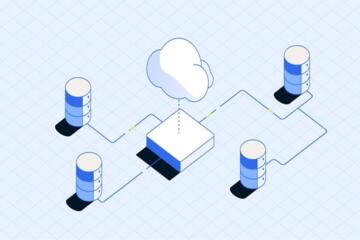
From Monolith To Distribution
A monolithic database concentrates data and logic behind one operational boundary, so transactions, indexes, and backups follow one set of rules. A distributed system spreads data across nodes and often across failure domains, so the same user action may involve multiple services, networks, and storage engines. The migration succeeds when you preserve the business invariants that the monolith enforced, while accepting that distributed systems trade some simplicity for new failure modes.
One practical example: an order placement flow that used to run as a single database transaction may become a sequence of writes across services. If the monolith guaranteed “an order exists only if payment is captured,” the distributed design must recreate that guarantee using either transactional boundaries that span components (rare at scale) or compensating logic with clear state transitions. Teams often start by identifying which invariants must remain synchronous and which can become eventually consistent, then they pick patterns that match those requirements.
Another example: a reporting query that previously scanned one database can become a multi-source aggregation job. If you migrate the write path first, you may still need a read model that stays accurate enough for dashboards, audits, and customer support. That read model can be built with change data capture, event streams, or scheduled ETL, but each option changes how fresh the numbers are and how you handle late-arriving updates.
Main Problems And Pain Points
Teams often treat “distributed database” as a single product choice, then discover that the hard part sits in data ownership, consistency, and operational workflows. The monolith usually hides latency spikes, lock contention, and retry behavior behind one connection pool and one transaction manager. Once you split responsibilities, you must decide where retries happen, how idempotency is enforced, and which component is responsible for reconciling partial failures.
Consistency expectations cause many failures. A monolith commonly gives strong consistency for reads after writes within the same database. Distributed systems may offer strong consistency only within certain scopes, while cross-node reads can lag. If you migrate without mapping those scopes, you get “it worked in staging” bugs where production traffic hits different partitions or different replica sets.
Supporting technologies also create hidden dependencies. Change data capture depends on log formats and retention windows; event-driven designs depend on message ordering guarantees and consumer lag; sharded storage depends on partition keys that keep hot data from collapsing into one shard. Even backup and restore assumptions change: a monolith backup is a point-in-time snapshot, while distributed recovery often involves replaying logs and reconciling replicas after node failures.
Operational pain shows up in monitoring and incident response. In a monolith, a slow query usually points to one database. In a distributed system, the same symptom can originate from network timeouts, overloaded coordinators, compaction pressure, or backpressure in downstream consumers. If you do not instrument end-to-end traces and per-partition metrics, you end up debugging by guesswork, which is expensive when data correctness is on the line.
Solutions And Advice
Map Invariants And Boundaries
Start by listing the invariants the monolith enforced: uniqueness rules, referential integrity expectations, “read-your-writes” requirements, and audit constraints. For each invariant, decide whether it must be synchronous during the user request or can be satisfied asynchronously. A useful technique is to annotate each API endpoint with the invariants it touches, then mark which invariants depend on cross-entity transactions.
When you define boundaries, treat data ownership as a contract. One service should be the system of record for a given entity type, and other services should consume changes through events or queries to that owner. This reduces write-write conflicts and makes reconciliation logic less chaotic. A small aside from common practice: teams that skip this step often end up with “shared tables” where multiple services write the same rows, and the resulting conflict resolution becomes a permanent tax.
For realistic outcomes, aim to reduce the number of cross-service invariants that require synchronous enforcement. Many migrations report fewer correctness incidents after they move from “global transaction thinking” to “local transaction plus explicit state transitions,” though the exact percentage varies by workload and team maturity.
Choose Consistency Patterns
Pick patterns that match the invariants you marked as synchronous or asynchronous. For synchronous requirements, you may need a transactional boundary within a single partition or within a single storage engine scope. For asynchronous requirements, use patterns such as outbox + event publishing, saga-style orchestration, or compensating actions with explicit states.
Idempotency is non-negotiable in distributed writes. Design each write operation so retries do not create duplicate side effects. A common method is to attach a client-generated idempotency key to the request and store it with the resulting state, then reject or reuse the prior result when the same key reappears. In one team’s internal runbook (dated 2024-11), they required idempotency keys for every “create” endpoint that could be retried by gateways.
Consistency also affects reads. If you need read-your-writes, you may require session affinity, read routing to the leader replica, or a read model that updates quickly enough for the user’s next action. If you can tolerate lag, define acceptable staleness windows for each user-facing feature and for internal reporting.
Plan Cutovers With Backfill
Cutover planning should include three phases: schema/data preparation, dual-write or dual-read strategy, and a rollback plan. Dual-write is risky when you cannot guarantee idempotency and ordering, so many teams prefer dual-read with a backfilled read model first. Backfill jobs should run with throttling and checkpoints so they can resume after failures without reprocessing everything.
For dual-read, route a small percentage of traffic to the new system and compare results against the monolith. Comparison can be done at the query result level for deterministic reads, or at the event/state level for workflows. A practical target is to keep the comparison window short at first (hours, not weeks) while you validate correctness and performance, then extend it once you trust the metrics.
Rollback must be operationally real. If you introduce a new event stream, you need a way to stop consumers and prevent new writes from entering the distributed path. If you add a new partitioning scheme, you need a way to revert routing decisions without losing in-flight requests. Teams that treat rollback as a document rather than an executable runbook often get stuck during the first incident.
Measure With Partition-Level Metrics
Define success metrics before migration begins. Track write latency percentiles, error rates, retry counts, and consumer lag for event-driven components. For sharded systems, track per-partition hotspots and rebalancing events, because a single hot shard can dominate tail latency even when average latency looks fine.
Instrument end-to-end traces across services and storage layers. Include correlation IDs from the API gateway through the database write and into the event consumer. When a bug appears, you want to see whether it is caused by missing events, delayed replication, or incorrect state transitions.
For a realistic performance check, run load tests that mimic production concurrency and data distribution. If your monolith used a single index and your distributed design uses partition keys, the load test must reflect the same access patterns. A load test that uses uniform random keys can hide the hotspot behavior that will show up with real customers.
Case Examples
Retail Orders With Eventual Reads
A retail company had a monolithic database where placing an order and recording payment were part of one transaction. During migration, they kept the payment capture as the system of record in the monolith for a short period, then introduced an outbox table in the monolith to publish “order placed” events. A new order service consumed those events and wrote to a distributed store that supported fast reads for order status pages.
They defined a state machine with explicit states: “created,” “payment_pending,” “paid,” and “cancelled.” The user-facing status page read from the distributed store, so it could lag by seconds when consumers fell behind. They set an internal alert on consumer lag and used a fallback message when the status was older than a defined threshold. The migration succeeded because the team treated the lag as a product constraint and measured it continuously, rather than assuming the distributed store would match monolith freshness.
Multi-Tenant Reporting Backfill
A SaaS provider used a monolithic database for multi-tenant billing reports. They migrated writes first by routing tenant-scoped updates to a distributed system, then built a reporting read model using change data capture. The backfill process ran in batches per tenant, with checkpoints stored in a separate control table.
During early tests, they found that tenants with large histories caused long backfill times and delayed report accuracy. They adjusted batch sizes and prioritized tenants based on active usage. They also added a reconciliation job that compared aggregated totals between the monolith and the read model for a sample of tenants. The team avoided a full cutover until reconciliation drift stayed within an agreed tolerance for multiple runs.
Comparison Table And Checklist
| Approach | Where It Helps | Main Risk | What To Measure |
|---|---|---|---|
| Dual-Read With Backfill | Validating correctness for reads while limiting write complexity | Read model lag and mapping bugs between schemas | Result diffs, staleness, and reconciliation drift |
| Outbox + Events | Reliable event publishing from the monolith | Outbox growth and consumer lag during incidents | Outbox backlog, publish latency, consumer lag |
| Saga With Idempotency | Cross-entity workflows without global transactions | Incorrect state transitions and missing compensations | State machine correctness, retry counts, dead-letter rates |
| Partitioned Writes | Keeping strong consistency within a partition scope | Hot partitions and rebalancing complexity | Per-partition latency, hotspot frequency, rebalance time |
Step-by-step checklist for a cautious migration:
- List invariants enforced by the monolith and tag each as synchronous or asynchronous.
- Define data ownership per entity type and remove shared write paths.
- Design idempotency keys and retry behavior for every write endpoint that can be retried.
- Choose a cutover strategy (dual-read first is common) and define reconciliation checks.
- Run backfill with throttling, checkpoints, and a drift tolerance target.
- Enable tracing and partition-level metrics before routing real traffic.
- Execute a small-percentage rollout, compare results, then expand routing in controlled steps.
- Keep rollback steps executable and tested with a dry run.
Common Mistakes
One frequent mistake is migrating the storage layer without migrating the operational model. Teams move tables and indexes, then discover that the new system’s failure modes require different runbooks for node loss, replica lag, and compaction pressure. If the on-call team cannot explain how to recover a partition, the migration plan lacks a critical dependency.
Another mistake is assuming that “eventual consistency” means “eventually correct.” Eventual consistency describes convergence under certain conditions, not correctness of business logic. If events are dropped, duplicated, or processed out of order, the system can converge to the wrong state. You need explicit ordering assumptions, deduplication, and state transition validation.
Teams also underestimate data modeling changes. Sharding requires a partition key that matches access patterns; otherwise, you get cross-shard queries that behave like distributed joins and degrade performance. A monolith might have tolerated a slow query because it ran once per day; a distributed system might run it per request, turning a “rare” issue into a constant tail-latency problem.
Finally, many migrations fail during cutover because they treat comparisons as optional. If you do not compare outputs during dual-read, you discover correctness issues only after full routing, when rollback becomes harder. A mild frustration many teams report: the first reconciliation run often finds schema mapping differences that look minor but affect totals, so schedule time for mapping fixes early.
FAQ
How Do I Identify Data Ownership?
Assign ownership by entity type and write responsibility: one service writes the canonical state, and other services consume changes through events or read APIs. Validate ownership by checking which workflows currently update the same rows in the monolith and removing those shared write paths.
What Consistency Level Should I Target?
Target consistency per invariant rather than per database. Mark which user actions require read-your-writes and which can tolerate lag, then choose patterns like partition-scoped transactions for synchronous invariants and saga or outbox-based workflows for asynchronous ones.
How Long Should Backfill Take?
Backfill duration depends on data volume, indexing, and throttling. Plan for resumable batches with checkpoints, then run a pilot backfill on a representative subset to estimate throughput and drift rates before scheduling a full backfill window.
What Metrics Catch Migration Bugs Early?
Track consumer lag, retry counts, dead-letter rates, reconciliation drift between monolith and read model, and per-partition tail latency. Add end-to-end tracing so you can pinpoint whether failures originate in storage, messaging, or application state transitions.
How Do I Handle Rollback Safely?
Keep rollback executable: stop routing new writes to the distributed path, pause or drain consumers, and revert routing decisions. If you used dual-read, rollback usually means switching reads back to the monolith; if you used dual-write, rollback must also address idempotency and in-flight events.
Author's Insight
Successful migrations treat correctness as a measurable property, not a belief. The most reliable plans start with invariants and state transitions, then map those requirements to consistency scopes and operational controls. Many teams underestimate the time needed for reconciliation and for building idempotent retry behavior, because those issues appear only under load and failure. A careful approach also respects that distributed systems change debugging: tracing, partition metrics, and runbooks must exist before traffic shifts.
Key Takeaways
- Preserve monolith invariants by tagging them as synchronous or asynchronous, then choose patterns that match those tags.
- Define data ownership to prevent shared write paths and reduce conflict resolution complexity.
- Use dual-read with backfill and reconciliation checks to validate correctness before full routing.
- Instrument partition-level metrics and end-to-end traces so incidents reveal root causes quickly.
- Test rollback as an operational procedure, not a written plan.